
News
Exploring Beneng Taro Cultivation in Rokan Hilir
The introduction of Beneng taro opens discussion of crop choices and development opportunities in Rokan Hilir.

Beneng taro takes its name from besar and koneng, referring to its large size and yellow colour. Widely cultivated in Banten Province, it is processed into flour and, according to the article, exported to countries including Australia, Malaysia, New Zealand, South Korea, India, Turkey and Japan.
Harvested at 2 years, it can produce a corm weighing around 40–45 kg. The crop contains protein, minerals and dietary fibre. In its area of origin, taro flour has been incorporated into products such as brownies, steamed buns and biscuits.

Beneng taro. Photo: Rusli, 2020
Planting 1 hectare requires around 10,000 seedlings. From about 4 months of age, mature fresh leaves can be harvested at approximately 1 kg per month. Corms can also be harvested from 9 months onwards.
The Economic Potential of Beneng Taro
Leaves
The article reports leaf exports of 200 tonnes per month to Australia, 40 to Malaysia and 100 to New Zealand. For 1 hectare, an estimated leaf harvest of 5 tonnes at Rp 1,000 per kg could generate Rp 5 million per month. Leaf production may rise after the corms reach 8 months, potentially reaching 10 tonnes per hectare and an estimated Rp 10 million per month in leaf sales.
Corms
At 1 year, corms are estimated to weigh 10–15 kg per plant. An estimated harvest of 100 tonnes from 1 hectare at Rp 1,000 per kg could generate Rp 100 million annually. If harvested at 2 years, the article estimates potential production of 400 tonnes and revenue of Rp 400 million per hectare.
“Beneng taro cultivation is recommended without chemical fertilisers. At initial planting, the requirements per hectare are 5 tonnes of animal manure and 1 tonne of dolomite lime. The same applies in year 2 if farmers intend to harvest at 2 years,” Rusli, LIRA’s regency-level representative in Rokan Hilir, told Yayasan Gambut in a written statement.
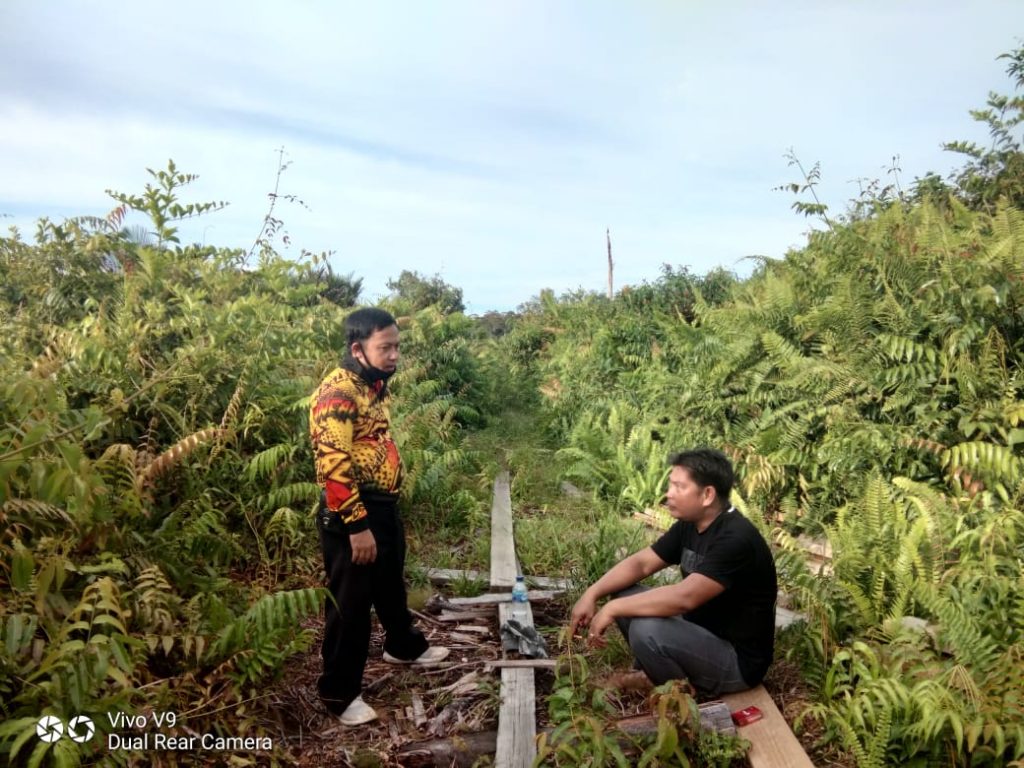
Surveying a proposed Beneng taro planting site in Labuhan Tangga Besar. Photo: Rusli, 2020
Rusli added that LIRA Rohil had coordinated with the Riau Beneng Taro Business Association (ASPUTABEN) on marketing. Discussions with farmers were under way, with plans for a 50-hectare demonstration area in Labuhan Tangga Besar, Bangko District, Rokan Hilir Regency. He described opportunities for partners to work together to strengthen community livelihoods.
Talas Beneng yang merupakan singkatan dari besar dan koneng yang berarti berukuran besar dan berwarna kuning merupakan talas yang banyak dibudidayakan di Provinsi Banten, talas tersebut biasa dijadikan tepung tapioka yang saat ini di ekspor ke sejumlah negara seperti Australia, Malaysia, New Zealand, Korea Selatan, India, Turkey dan Jepang.
Talas Beneng di panen setelah berumur 2 tahun dengan produksi umbi sekitar 40-45 Kg, talas ini memiliki kadar protein, mineral dan serta pangan yang tinggi, dimana di daerah asalnya tepung talas tersebut sudah di formulasikan menjadi produk olahan brownies, Bakpao dan Kue Kering.
Talas Beneng (Dok: Rusli, 2020)
Jika kita menanam seluas 1 hektar di butuhkan bibit talas bening sebanyak 10.000 batang, dan biasanya setelah berumur 4 bulan daun basah yang sudah tua bisa di panen sebanyak 1 kg perbulan nya, kemudian umbi talas tersebut juga bisa di panen setelah berumur 9 bulan keatas.
Nilai Ekonomis Talas Beneng
Daun Talas Beneng Daun Talas Beneng saat ini di ekspor ke berbagai negara diantaranya Australia 200 Ton/Bulan, Malaysia 40 Ton/Bulan dan New Zealand 100 Ton/Bulan, untuk 1 Hektar Estimasi hasil panen daun Talas Beneng 5 Ton/Ha dengan harga jual Rp 1.000/kg, estimasi pendapatan petani bisa mencapai 5 Juta/bulan hanya dari daun saja, produksi daun akan meningkat saat umur umbi talas di atas 8 bulan dan bisa mencapai 10 ton per hektar, artinya estimasi pendapatan petani bisa mencapai 10 juta perbulan hanya dari daun talas.
Umbi Talas Beneng Perkiraan umbi yang berumur 1 tahun bobot nya bisa mencapai 10 – 15 kg/batang, estimasi total produksi 1 ha umbi talas bisa mencapai 100 Ton dengan harga jual Rp 1.000/kg nya, jika di kalkulasi bisa mencapai 100 Juta per tahun dari panen umbi nya, namun jika petani bisa bersabar potensi umbi bisa lebih besar saat di panen berumur 2 tahun dengan estimasi produksi 400 ton sehingga potensi pendapatan petani bisa mencapai 400 juta/hektar
“Budidaya Talas Beneng di rekomendasikan tidak menggunakan pupuk kimia dalam perawatan nya, untuk kebutuhan pupuk organik kandang perhektarnya di awal tanam sebanyak 5 ton dan kapur dolomit 1 ton, begitu juga di tahun ke 2 jika petani berniat memanen umbi pada umur 2 tahun” tutur Rusli yang menjabat sebagai Bupati LIRA di Kabupaten Rokan Hilir kepada Yayasan Gambut dalam keterangan tertulis.
Survey Rencana Lokasi Tanam Talas Beneng di Kepenghuluan Labuhan Tangga Besar (Dok: Rusli, 2020)
Sambungnya untuk pemasaran hasil panen Talas Beneng, LIRA Rohil telah menjalin koordinasi dengan Asosiasi Pelaku Usaha Talas Beneng (ASPUTABEN) Provinsi Riau, dan saat ini kami juga sudah menjalankan serangkaian diskusi dengan petani dan akan mengembangkan 50 Hektar lahan percontohan di Kepenghuluan Labuhan Tangga Besar, Kec. Bangko, Kab. Rokan Hilir, peluang pasar masih terbuka lebar, sehingga terbuka peluang para pihak untuk saling bekerja sama dalam upaya meningkatkan perekonomian masyarakat.